Homeowners across Fort Collins often choose vinyl fence installation for its durability and clean appearance, yet many notice performance differences depending on elevation, slope, and exposure. From lower valley neighborhoods to properties closer to foothill terrain, elevation subtly changes how a vinyl fence reacts to sun, temperature shifts, and ground conditions.
This guide explains why elevation matters and how thoughtful installation choices ensure consistent results across varying landscapes.
How Elevation Shapes Fence Performance
Temperature Swings Are More Intense at Higher Points
In Fort Collins, higher elevations experience sharper day-to-night temperature changes. During vinyl fence installation, these fluctuations matter because vinyl expands and contracts with temperature. When panels are installed with proper spacing, movement stays controlled and invisible.
Wind Exposure Increases With Height
Elevated areas often experience stronger and more frequent winds. A properly installed vinyl privacy fence flexes under pressure rather than cracking, making it well-suited for properties exposed to open airflow.
Sunlight Varies by Elevation and Orientation
UV Intensity Changes With Terrain
Sun exposure isn’t uniform across all neighborhoods. Homes at higher elevations receive more direct UV radiation due to thinner atmospheric layers. Quality vinyl fence installation accounts for this by selecting materials engineered with UV inhibitors.
Directional Exposure Matters More Than Homeowners Expect
South- and west-facing fence lines experience longer daily sun exposure. Over time, these sections age differently if installation doesn’t account for orientation and material thickness.
Ground Conditions and Structural Stability
Sloped Lots Require Specialized Installation
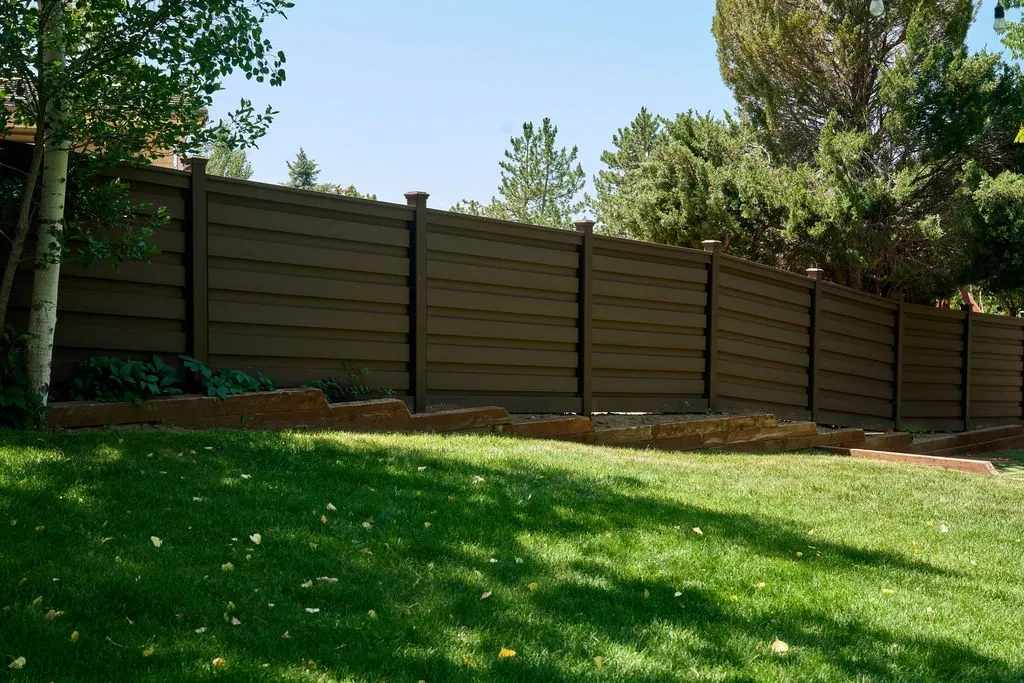
Elevation changes often come with uneven terrain. On sloped properties, vinyl fence installation requires stepped or racked panel designs to maintain alignment and stability without stressing the posts.
Soil Composition Impacts Longevity
Higher elevation soils can be rockier or drain differently. Secure post setting ensures a vinyl fence remains upright despite seasonal soil movement and freeze-thaw cycles.
Material Engineering Makes the Difference
Vinyl Is Designed to Adapt, Not Resist
Unlike rigid materials, vinyl adapts to environmental stress. This flexibility allows vinyl fence styles to maintain shape across elevation-related changes in wind and temperature.
Thickness and Reinforcement Matter
Not all vinyl performs equally. Thicker panels and reinforced rails offer added resistance in higher-elevation areas where exposure is greater.
Homeowners comparing options often review vinyl fence installation solutions midway through the planning process to match material strength with elevation demands.
Fence Style Choices and Elevation Performance
Privacy Fences Handle Wind Differently
A vinyl privacy fence offers full enclosure, which increases wind resistance. Professional spacing and reinforcement help these styles perform well even in elevated, breezy locations.
Open Styles Reduce Pressure
Some vinyl fence styles, such as picket or semi-privacy designs, allow airflow to pass through. This reduces wind load and can be beneficial for higher elevations with consistent gusts.
Maintenance Expectations by Elevation
Higher Elevations Require Minimal Extra Care
One benefit of vinyl fence installation is low maintenance, regardless of elevation. Occasional cleaning removes dust and debris that can accumulate more quickly in windier areas.
Uniform Aging Is Easier to Achieve
Because vinyl doesn’t absorb moisture, elevation-related humidity differences have minimal effect. This allows a vinyl fence to age evenly across varied terrain.
Long-Term Performance Compared to Other Materials
Vinyl Outperforms Wood in Elevated Areas
Wood fencing often struggles with expansion, warping, and moisture retention at higher elevations. Vinyl fence installation eliminates these issues, providing consistent performance over time.
Metal Can Be Vulnerable to Temperature Stress
Metal fences conduct heat rapidly, making them susceptible to expansion and contraction. Vinyl’s insulating properties help it remain stable across elevation changes.
According to guidance from the National Renewable Energy, UV exposure and temperature variability increase with elevation, affecting how outdoor materials age over time in high-altitude environments.
Why Local Experience Matters
Elevation Knowledge Improves Installation Accuracy
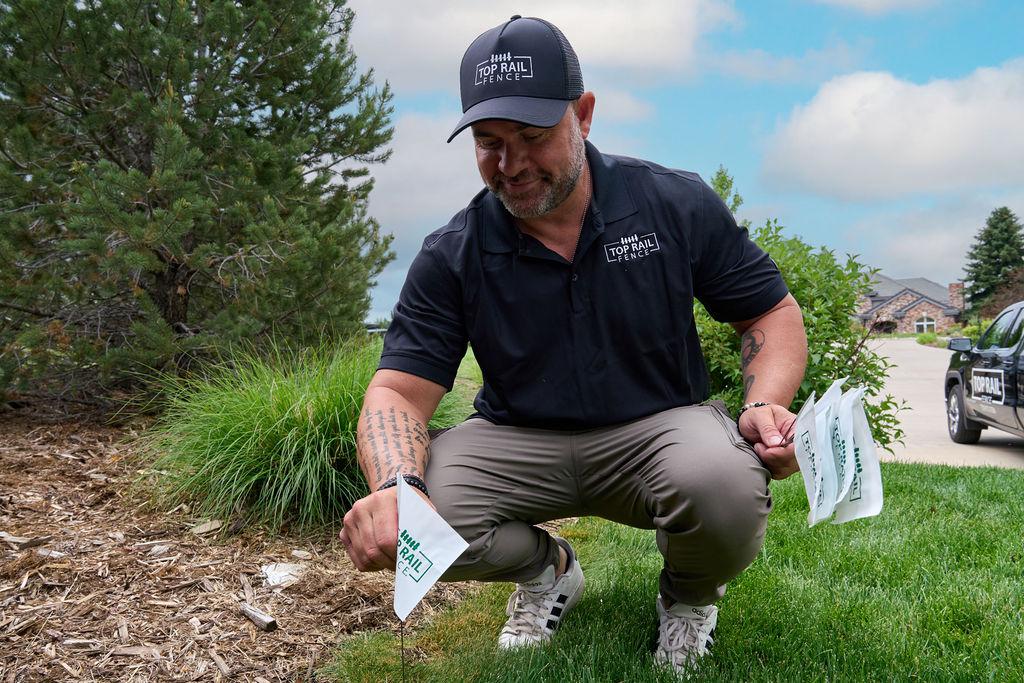
Understanding how Fort Collins' elevation varies from one neighborhood to another allows installers to adjust spacing, depth, and panel selection accordingly. Top Rail Fence Fort Collins applies this local expertise to every project.
Customized Planning Prevents Future Issues
Rather than using one-size-fits-all methods, elevation-aware vinyl fence installation provides better alignment, durability, and appearance in the long term.
Making the Right Vinyl Fence Decision
Match Fence Style to Property Conditions
Choosing the right vinyl fence styles ensures your fence performs as well as it looks. Elevation, wind exposure, and lot shape should guide design decisions.
Invest in Installation, Not Just Materials
Even the best vinyl performs poorly without correct installation. Elevation-aware planning protects your investment and prevents premature wear.
Final Thoughts on Elevation and Vinyl Fence Performance
Elevation differences across Fort Collins quietly influence how fencing materials behave, but vinyl fence installation is uniquely equipped to handle these variations. With proper spacing, material selection, and professional expertise, a vinyl fence remains durable, attractive, and low-maintenance regardless of terrain. For guidance tailored to your property’s elevation, connect with Top Rail Fence Fort Collins through the Contact Us page and plan a fence built to perform confidently across every level of your landscape.