If you have ever wondered why the same aluminum fencing system performs differently from one yard to another, the answer often lies beneath your feet. In Louisville, rolling terrain, gradual inclines, and uneven soil profiles quietly shape how fences age, drain, and hold alignment over time. Property slope affects water flow, soil pressure, and installation precision, all of which influence how an aluminum fence performs year after year. Homeowners exploring fencing options across the city often begin by reviewing the service area details for Louisville aluminum fencing solutions to understand how local conditions factor into design and installation choices.
Understanding the Role of Slope in Aluminum Fence Longevity
Why Terrain Matters More Than Most Homeowners Realize
Slope changes how water moves across a property. On flat ground, rain tends to absorb evenly into the soil. On sloped lots, water accelerates downhill, carrying sediment and creating uneven pressure around fence posts. For aluminum fencing, this matters because post stability depends on consistent soil compaction. Over time, downhill posts may loosen sooner if drainage and footing depth are not properly planned.
In Louisville, spring rains can be heavy, and sloped properties amplify runoff. This is why thoughtful grading and post placement are essential during aluminum fence installation, especially on lots with even mild elevation changes.
Soil Shifting and Post Stability
Sloped ground naturally shifts more than level terrain. As soil settles or erodes, fence posts can lean or create visible height inconsistencies. Aluminum performs well because it resists corrosion and warping, but it still relies on a stable footing. Professional installers account for slope by adjusting post depth and spacing to keep fence panels aligned.
How Slope Influences Fence Design Choices
Panel Style Versus Racked Installation
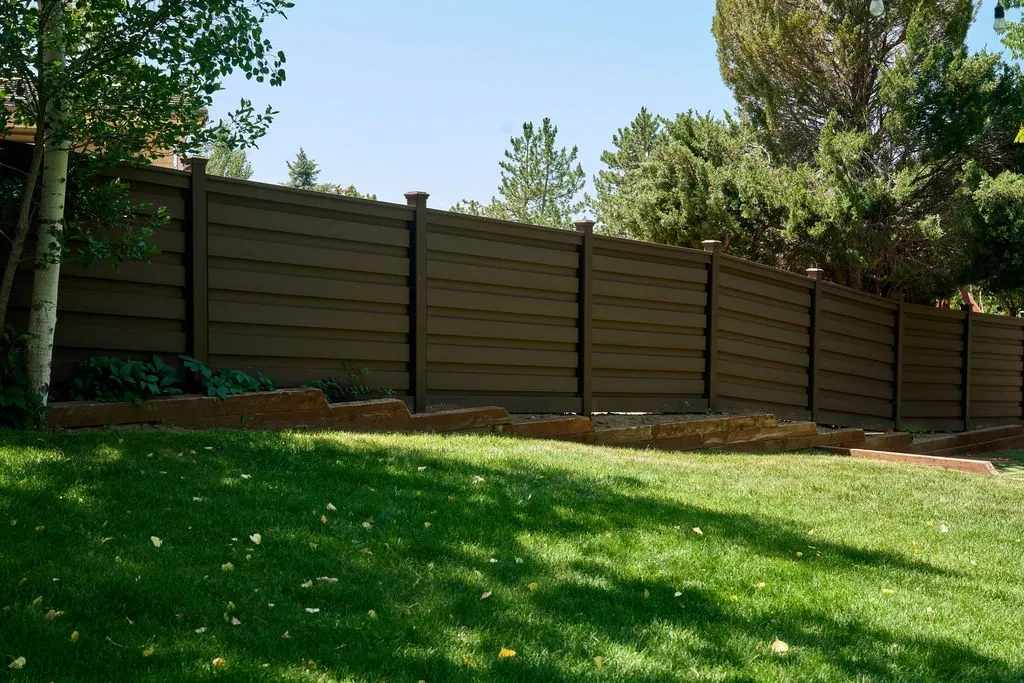
Not all aluminum fences are designed the same way. On sloped properties, racked panels that follow the contour of the land are often more effective than stepped designs. Racking allows aluminum fencing to maintain consistent spacing and visual flow while adapting to gradual elevation changes.
Privacy Considerations on Inclines
An aluminum privacy fence behaves differently on a slope than on flat ground. Gaps can appear at the bottom of panels if the design does not account for elevation changes. Proper planning ensures privacy remains intact while still allowing for drainage and airflow. This balance is especially important on hillside properties where water needs a clear path to move away from posts.
Installation Precision on Sloped Louisville Properties
Why Installation Technique Matters More Than Materials Alone
Even the best materials underperform without proper installation. On slopes, aluminum fence installation requires precise measurements, adjusted post depths, and careful alignment. Installers often stagger panel heights slightly to maintain a clean top line without forcing panels against the terrain.
Midway through the planning process, many homeowners compare aluminum to other options, including wood or split rail fence materials, to see how each performs on uneven ground. While split rail systems flex naturally with terrain, aluminum offers a cleaner look and longer lifespan when installed correctly.
Drainage Planning and Long-Term Performance
Drainage is one of the most overlooked factors in fence performance. On sloped lots, directing water away from post bases reduces soil erosion and settling. Research shared by the University of Kentucky Cooperative Extension explains how proper grading and drainage management reduce structural stress on outdoor installations, including fencing, across varied terrain. This insight reinforces why slope-aware installation is essential for long-term fence performance.
Maintenance Expectations for Sloped Aluminum Fences
How Slopes Change Maintenance Patterns
One advantage of aluminum fencing is its low maintenance profile. However, on sloped properties, periodic visual inspections are still important. Checking for soil washout, exposed concrete footings, or slight panel shifts helps catch small issues before they grow.
Preventing Minor Issues From Becoming Major Repairs
When addressed early, minor alignment issues rarely require major work. In many cases, simple adjustments restore stability without full fence repair. Homeowners who schedule routine evaluations with Top Rail Fence Louisville often extend the lifespan of their fencing systems by addressing slope-related wear early.
Choosing the Right Fence Partner in Louisville
Matching Fence Design to Property Topography
Every property slope is different. Some are gradual and barely noticeable, while others require detailed planning. Working with professionals who understand local terrain ensures your fence is designed for performance, not just appearance. Top Rail Fence Louisville evaluates slope, drainage, and soil conditions before recommending panel styles or installation methods.
As projects move toward completion, homeowners are encouraged to reach out through the Contact Us page to discuss property-specific challenges and design options tailored to the Louisville terrain.
Long-Term Value of Slope-Aware Aluminum Fencing
Why Planning Today Prevents Problems Tomorrow
A fence that respects the land it sits on lasts longer and looks better. Aluminum fencing installed with slope considerations in mind resists movement, maintains visual consistency, and requires fewer adjustments over time. This approach protects both curb appeal and investment value.
For homeowners considering upgrades or replacements, connecting with Top Rail Fence Louisville ensures that slope, drainage, and design all work together. When you are ready to explore options or plan a project, the team can help you select fencing solutions that perform reliably across Louisville’s varied landscapes.