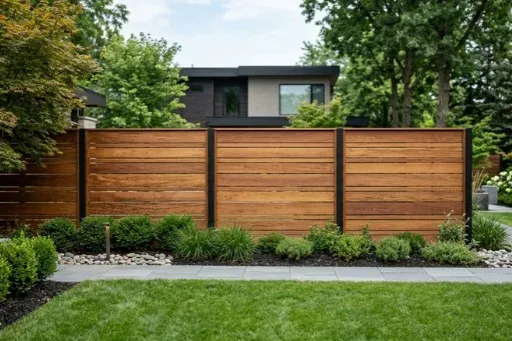
New residential developments have a visual rhythm that becomes noticeable as soon as the homes, driveways, landscaping, and outdoor features start coming together. When each lot uses different boundary materials, colors, and fence profiles, that rhythm can quickly become inconsistent. For builders and homeowners planning a cohesive neighborhood appearance, Top Rail Fence Charlottesville can help develop vinyl fence installation plans that bring a consistent look across individual properties while still allowing each yard to function independently.
In Charlottesville, where residential development includes different housing types and lot configurations, fencing has to work within the character and layout of each property. The city's residential zoning districts accommodate everything from single-unit homes to townhomes, duplexes, and other housing forms, making thoughtful exterior design important when multiple properties are being developed together.
A unified look starts with the fence profile
A new neighborhood can contain homes with different elevations, floor plans, landscaping plans, and lot dimensions. Even when the houses share a general architectural direction, inconsistent fencing can make the development feel visually disconnected.
A coordinated vinyl fence approach can solve part of that problem by establishing common visual elements throughout the community. Consistent panel profiles, post styles, colors, and gate designs can help create a recognizable boundary treatment without requiring every property to look exactly the same.
Keeping individual lots visually connected
The goal of vinyl fence installation across a residential development is not necessarily to make every property identical. Instead, a common fencing system can establish a baseline appearance while allowing variations where the lot requires them.
For example, corner lots may need different gate positioning than interior lots. A home with a larger backyard may require a longer fence run, while a smaller lot may need a more compact configuration. Using the same core vinyl fencing style across those different layouts can keep the development visually connected.
Matching fence details across multiple homes
Small details become more noticeable when several homes sit close together. A dark post on one lot, a different panel profile on another, and a completely different gate design farther down the street can create visual inconsistency even when the homes themselves are well coordinated.
A planned vinyl fence installation can standardize those details. Repeating the same color, post dimensions, panel design, and gate treatment helps the fencing appear intentional rather than individually selected without consideration for the surrounding homes.
Why vinyl works well for new development schedules
New residential construction involves numerous moving parts. Landscaping, driveways, grading, utilities, exterior finishes, and homeowner improvements all have to fit into the broader development schedule.
Choosing a low maintenance fence can make the long-term ownership side of that equation simpler. Vinyl fencing does not require the same type of recurring painting or staining associated with many wood fencing systems, which can be useful when a development contains multiple properties that need to maintain a consistent appearance over time.
Reducing variation as properties age
A neighborhood can look highly coordinated when it is first completed and become increasingly inconsistent as individual homeowners make changes.
One homeowner may repaint a wood fence, another may replace damaged boards, and another may leave the fence weathered. Over several years, those differences can become increasingly visible.
A vinyl fence offers a more consistent material appearance from one property to another. When multiple homes use a coordinated system from the beginning, the original design intent can remain easier to maintain as the neighborhood matures.
Supporting simpler exterior upkeep
Fence maintenance is one more responsibility for homeowners after construction is complete. A low maintenance fence can reduce the amount of routine attention required to keep the boundary looking presentable.
That characteristic can be particularly useful in newer communities where homeowners are already managing landscaping, lawn care, exterior cleaning, and other elements of property upkeep.
Planning fence lines around different lot layouts
Consistency does not mean ignoring the physical differences between lots. A successful fence installation needs to account for grading, property dimensions, access points, landscaping, structures, and the relationship between neighboring yards.
The same fence style can be used throughout a development while the actual layout changes from property to property.
Working with corner and interior lots
Interior lots often have straightforward rear and side boundaries, while corner properties may have more street-facing exposure. That difference can influence where fencing begins, where gates are positioned, and how the finished boundary relates to sidewalks or other visible areas.
Using a consistent vinyl fence style while adjusting the configuration for each property allows the neighborhood to retain a unified appearance without forcing every lot into the same layout.
Accounting for grade changes
New developments can include properties with noticeable changes in elevation. A fence line that works perfectly on level ground may require a different installation approach when the terrain rises or falls.
During vinyl fence installation, the fence layout should be considered alongside the site's grade so that transitions between sections look deliberate. Proper planning can prevent abrupt changes that make otherwise consistent fencing appear disconnected.
Creating boundaries without making the neighborhood feel closed in
A residential development needs boundaries that provide useful separation without overwhelming the surrounding homes. Fence height, spacing, placement, and color can all affect how open or enclosed a street feels.
Vinyl can offer a clean appearance that works well when the goal is to establish property lines while maintaining a polished exterior.
Choosing proportion over unnecessary bulk
A fence should relate to the scale of the house and the size of the yard. A fence that is visually oversized for a compact property can dominate the landscape, while a properly proportioned design can provide separation without becoming the first thing people notice.
This is especially relevant when several homes are positioned close together. A coordinated vinyl fence profile can create a repeated visual element without making the development feel heavily enclosed.
Using gates as part of the overall design
Gates are another opportunity to maintain consistency. If every property uses a different gate configuration, the development can lose some of the visual continuity created by the fencing itself.
A coordinated vinyl fence installation can incorporate gate styles that complement the main panels and posts. Gate placement can still vary according to driveway access, pedestrian routes, yard use, and individual property needs.
Building a fencing standard that can scale
For developers working across several homes, consistency becomes easier when the fencing approach is considered before individual installations are underway. Establishing preferred materials, colors, profiles, and general placement guidelines can create a clearer framework for the entire project.
Top Rail Fence Charlottesville can help approach these projects with the broader development in mind rather than treating every fence as an isolated job.
Coordinating multiple installations
When several homes require fencing, scheduling can influence how smoothly the work progresses. Completed landscaping, construction access, grading, and homeowner occupancy may all affect when a particular property is ready.
A consistent fencing specification can simplify communication because the core material and design decisions have already been established. Individual properties can then be measured and configured according to their specific conditions.
Leaving room for homeowner differences
Even within a coordinated development, residents may have different priorities. One homeowner may want to enclose a backyard for pets, another may need a gate positioned closer to a patio, and another may want a boundary around a particular section of the property.
A common vinyl fence style can accommodate those differences while preserving the larger visual identity of the neighborhood.
Considering Charlottesville requirements before installation
Fencing should also be evaluated in relation to the property's location and applicable development requirements. Charlottesville uses different residential zoning districts with standards governing housing types, lot sizes, density, and development characteristics, so the appropriate approach can depend on the specific property and project.
That makes early planning useful for new developments. Rather than selecting a fence after construction is nearly complete, the boundary treatment can be considered alongside the lot layout and other exterior features.
Reviewing each property's conditions
Even homes within the same development can have different site conditions. Driveways, slopes, landscaping, drainage areas, patios, utility equipment, and neighboring structures may all affect the final fence layout.
A professional fence installation plan should account for those conditions before materials are ordered. This helps maintain the desired neighborhood appearance while making sure each individual installation works with its property.
Making a consistent finish part of the development identity
A coordinated fence can become one of the subtle features that makes a new residential community feel complete. The houses may have different floor plans, residents may personalize their yards, and landscaping may evolve over time, but a consistent boundary treatment can continue to connect the properties visually.
For new developments, vinyl fence installation offers an opportunity to establish that consistency from the outset. The combination of a repeatable appearance, adaptable layouts, and low maintenance fence characteristics makes vinyl a practical option when multiple residential properties need a cohesive exterior treatment.
Top Rail Fence Charlottesville can help developers and homeowners consider fence profiles, lot-specific layouts, gates, and installation requirements before the boundary work begins. When the project is ready for the next step, the Contact Us page provides a direct way to discuss the fencing needs for a new residential property or development.
A well-planned vinyl fence does more than separate one yard from another. Across a new neighborhood, it can provide a repeated design element that helps individual properties feel connected while still allowing each lot to serve its own purpose. Top Rail Fence Charlottesville can help create a coordinated approach that gives Charlottesville's newer residential developments a cleaner, more consistent finish from lot to lot.