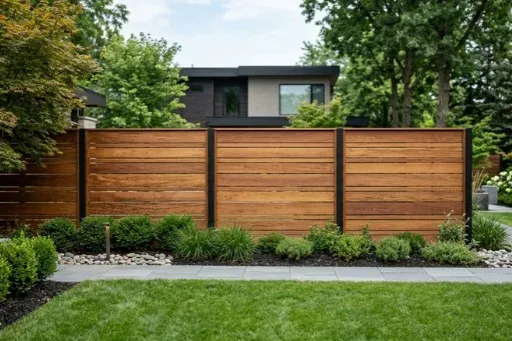
Horizontal fencing continues to give outdoor spaces a clean architectural appearance, but its appeal goes beyond modern style. The right horizontal fence privacy design can help create a more secluded backyard, define outdoor living areas, and complement the architecture of a home. If you are researching materials, layouts, and installation options, explore Top Rail Fence locations to connect with a local fencing team that can help turn a design concept into a finished project.
In 2026, horizontal fencing can be customized in numerous ways. Board width, spacing, height, color, material, posts, gates, and landscaping can all influence the finished appearance. Instead of treating a horizontal fence as a standard panel, consider how each design element can work together to create a private outdoor environment that feels intentional.
Start with the level of privacy you actually need
The first step in developing a horizontal fence privacy design is deciding how much visual separation your property requires. A fence surrounding a backyard seating area may need a different configuration from one bordering a sidewalk, pool area, driveway, or neighboring property.
Full coverage for everyday seclusion
Closely positioned horizontal boards can create a more solid visual barrier. This configuration works well when the goal is to reduce direct views into a backyard or establish a clearly defined private area.
Board width also affects the appearance. Wider boards create fewer horizontal lines, producing a simpler visual effect. Narrower boards introduce more lines and can give the fence a more detailed appearance.
Filtered screening for light and airflow
A small, consistent space between boards creates a lighter appearance while still providing a degree of screening. This approach can be useful when complete coverage is not necessary.
The spacing should be selected according to the viewing angles around the property. A gap that appears insignificant from one direction may provide considerably more visibility from another, especially when the fence sits close to a walkway or neighboring structure.
Layered privacy around outdoor spaces
A fence does not always have to provide every bit of privacy by itself. Plantings, pergolas, outdoor structures, and other landscape features can work alongside horizontal fence privacy to create multiple layers of screening.
This can make a yard feel enclosed without making the entire perimeter appear like a solid wall.
Give the fence a stronger architectural presence
One of the defining characteristics of horizontal fencing is the way its boards emphasize width. That visual effect can be used to make a yard feel longer or to complement the strong horizontal lines already present on a home's exterior.
Try a continuous board pattern
Keeping the horizontal lines consistent across multiple sections creates a calm, unified appearance. This works particularly well on long property boundaries where frequent changes could make the fence look visually busy.
For a more refined result, the transitions between sections should be carefully planned so that posts, gates, and corners feel like intentional parts of the overall design.
Use contrasting posts as a design feature
Posts do not have to disappear into the fence. A contrasting finish can make them part of the design.
For example, natural-toned boards paired with darker structural elements can create definition between individual sections. The same approach can be used with a single-color fence when you want the posts to provide subtle visual separation.
Create interest with board widths
Using one board width throughout the fence creates a straightforward appearance, while combining different widths can add more character.
A carefully planned arrangement might use wider boards through the primary privacy section and narrower boards as an accent near the top. The important consideration is consistency. Random changes can make a fence look unfinished, while a deliberate pattern can give it a custom appearance.
Make the top edge part of the design
The upper edge of a privacy fence is highly visible, particularly from inside the yard. Instead of treating it as an afterthought, consider how the top profile fits the surrounding landscape.
Keep the top line level
A level top edge can reinforce the modern character associated with horizontal fence privacy. This approach is especially effective when the property itself is relatively flat.
On properties with changes in elevation, however, a completely level fence may not always be practical. The layout can instead be adapted to the terrain while maintaining consistent horizontal lines within each section.
Step the fence with the landscape
A stepped configuration can follow changes in grade while maintaining a deliberate appearance. Rather than forcing every section to the same elevation, the fence can transition progressively as the ground rises or falls.
This approach also provides an opportunity to create different privacy zones. One section might provide greater screening around a patio, while another could use a lower profile along an open portion of the yard.
Connect the fence to your outdoor living area
A privacy fence can become more than a property boundary when it is integrated with the way you use the yard.
Frame a patio or seating area
A horizontal fence can provide a clean backdrop for outdoor furniture, dining areas, fire features, or entertaining spaces. Positioning the fence behind a seating area can make the space feel more defined without requiring additional walls.
The fence color can also influence the atmosphere. Natural wood tones can reinforce a warm landscape, while darker finishes can create contrast against lighter furniture and planting.
Use planting to soften the boundary
Plants can break up large expanses of fencing and introduce texture around the perimeter. Ornamental grasses, shrubs, climbing plants, and strategically placed trees can soften the transition between the fence and the rest of the yard.
Planting should still leave enough room for access and maintenance. A beautiful horizontal fence privacy design should remain practical after installation rather than becoming difficult to inspect or maintain.
Coordinate gates with the main fence
A gate should look like part of the same design rather than a separate feature. Matching horizontal boards can carry the visual lines of the main fence into the entry point.
Gate size and hardware should also reflect how the entrance will be used. A pedestrian gate may need a different configuration from a wider driveway gate, but both can share the same materials and design language.
Choose materials with long-term performance in mind
The appearance of a horizontal fence depends heavily on the material selected. Wood can provide natural texture and can be finished in different shades, while other fencing materials may offer different maintenance characteristics.
For wood fencing, finishing is an important part of long-term care. The U.S. Forest Service explains that exterior stains can help protect wood surfaces from sunlight and moisture, making finish selection an important consideration for outdoor applications.
Horizontal construction also deserves careful attention because boards are positioned differently from traditional vertical pickets. The Forest Service notes that horizontal rails can require additional protection against decay, particularly in environments with greater moisture or decay hazards.
A professional fence installation can account for the material, site conditions, drainage, structural requirements, and finish before construction begins.
Build privacy into the entire property layout
Good horizontal fence privacy is not simply about making the fence as tall or solid as possible. It is about identifying where privacy matters most and designing the fence accordingly.
A backyard dining space may need stronger screening than a side yard. A pool or patio may benefit from a more enclosed perimeter, while the front of a property could use a more open design. Different sections can therefore have different visual treatments while still sharing the same overall material and style.
This is also where professional planning can make a difference. A fence company can assess the property, discuss the intended use of each area, and help determine how height, spacing, gates, posts, and materials should work together. Topography, existing structures, property boundaries, and applicable requirements can all influence the final design.
If you are comparing privacy configurations and materials, horizontal fencing options offer a great starting point for your design.
Consider maintenance before choosing the final look
A beautiful fence should also be manageable over time. Before selecting a finish, think about how much maintenance you are prepared to perform and how the fence will be exposed to weather.
Natural wood finishes may require periodic attention to maintain their appearance. Landscaping should also be kept from trapping excessive moisture against the fence. Keeping vegetation trimmed away from the boards and maintaining adequate clearance near the ground can help make inspections easier.
The design itself can also affect maintenance. Complex patterns, numerous decorative elements, and difficult-to-access sections may require more attention than a straightforward horizontal layout.
Turn your favorite idea into a practical design
The best horizontal fence privacy concept is one that balances appearance, coverage, durability, and the way the property is actually used. A clean horizontal pattern can modernize an exterior, while thoughtful spacing and carefully positioned sections can create the privacy needed for everyday outdoor living.
Whether you prefer a solid contemporary appearance, a lightly spaced screen, contrasting posts, natural wood tones, or a combination of fencing and landscaping, the design can be adapted to fit the property. Working with an experienced fence company can also help translate an inspiration photo into a practical plan that accounts for the site's specific requirements.
For help planning your next fence installation, contact Top Rail Fence to discuss your project and explore options for creating a horizontal fence privacy design that fits your property.