Infill development can create an interesting relationship between a new home and an established neighborhood. A newer house may have a contemporary exterior, a compact yard, and carefully planned outdoor areas, while older homes, mature trees, sidewalks, and existing fences remain close by. In Charlottesville, a well-planned wood fence can connect those different elements by creating a defined outdoor edge without making a newer lot feel disconnected from its surroundings. Homeowners considering a project can explore local options with Top Rail Fence Charlottesville while considering the property's architecture, dimensions, access points, and landscape.
A compact lot needs more than a simple perimeter
An infill property can have a very different layout from a home surrounded by large expanses of undeveloped land. The house may occupy a significant portion of the lot, leaving limited space for patios, planting beds, play areas, gardens, and pathways.
That makes every section of the boundary more consequential. A wood fence should contribute to the way the yard functions rather than simply follow the property line without consideration for what happens inside it.
Making limited outdoor space feel organized
A compact yard can become visually busy when several outdoor features compete for attention. A patio may sit beside a planting bed, a pathway may run toward a side gate, and a small lawn may share space with outdoor furniture.
A fence can bring these components together by establishing a consistent outer edge. Instead of seeing each feature as an isolated addition, the yard can read as one coordinated outdoor environment.
Avoiding unnecessary visual bulk
A fence that is oversized for the property can make a small yard feel even smaller. This is particularly noticeable when the boundary sits close to the home's windows, patio, or primary outdoor living area.
A carefully proportioned wood fence can establish separation while maintaining visual breathing room. Height, board arrangement, and the amount of openness can all influence how substantial the finished boundary feels.
Letting wood balance a newer architectural style
Newer infill homes often use materials and shapes that emphasize simplicity. Smooth siding, large windows, geometric rooflines, stone accents, and dark trim can create a crisp exterior.
Wood introduces another layer of texture.
Bringing natural texture into a contemporary setting
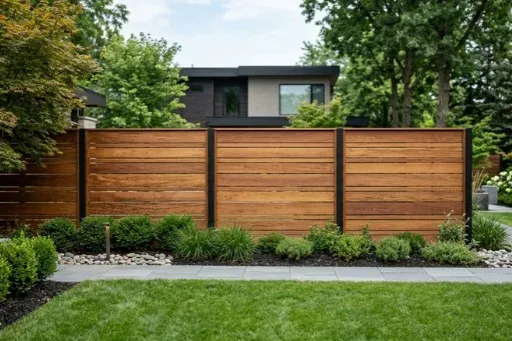
The grain and variation of wood can soften the appearance of manufactured and masonry surfaces. This does not mean the fence needs to look rustic.
A streamlined modern wood fence can retain clean lines while introducing a warmer material into the overall exterior design. The result can feel contemporary without becoming excessively stark.
Repeating proportions instead of copying materials
A fence does not have to match the home's siding or trim exactly. Instead, its proportions can complement architectural characteristics already present on the property.
For example, a home with strong horizontal lines may work well with horizontally oriented boards, while a vertically emphasized exterior may pair naturally with vertical fencing.
The objective is visual coordination rather than duplication.
Treating the fence as part of the yard's layout
A fence can influence how people experience an outdoor space. Its position can frame views, establish transitions between activities, and create a sense of direction through a compact property.
That makes the design process more than choosing a material and determining a height.
Framing the areas people actually use
The most frequently used portion of an infill backyard may be the patio or deck rather than the entire lawn. A fence can help frame that area and give it a more deliberate backdrop.
A section of fencing behind an outdoor dining area, for example, can make the space feel defined without requiring additional walls or structures.
Other sections of the yard can remain more open when complete enclosure is unnecessary.
Giving landscaping a stronger foundation
Newer lots may begin with relatively young landscaping. Trees and shrubs can take years to reach their intended size, leaving portions of the property visually exposed during the early stages of development.
A wood fence can provide structure while the landscape matures. Plantings can eventually soften sections of the fence and create a layered appearance as they grow.
This allows the boundary to serve a purpose immediately while remaining compatible with future landscape development.
Designing around the character already present
An infill home enters a neighborhood that already has an identity. The surrounding homes may use different architectural periods, fence materials, landscaping approaches, and setback patterns.
The new fence should acknowledge that environment without simply reproducing what is already there.
Charlottesville's architectural design guidelines address the relationship between new construction and existing neighborhood character in applicable design-control areas, including considerations for fence materials and design.
Creating continuity without making everything identical
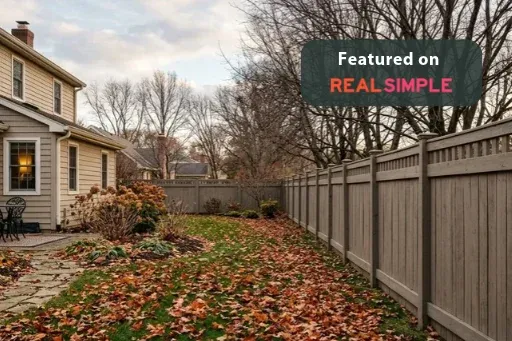
A contemporary wood fence can still feel appropriate next to older homes when its scale and placement are carefully considered.
The goal can be as simple as maintaining a compatible height, respecting established visual patterns, or choosing a finish that works with nearby materials.
That creates continuity while allowing the new property to maintain its own identity.
Thinking about the street-facing side
A fence located near a sidewalk or street can have a significant influence on the property's exterior appearance.
The side visible from outside the property should receive the same attention as the backyard-facing portion. Consistent construction, clean transitions, and thoughtful gate placement can make the boundary appear intentional from the public side.
Using different levels of enclosure strategically
One of the advantages of wood is the range of ways it can be configured. A homeowner does not necessarily have to use exactly the same visual treatment around every part of an infill property.
Creating a more enclosed outdoor room
Where privacy is important, a more closely spaced wood fence can help establish a secluded area around a patio, seating space, or backyard gathering area.
This can make a compact outdoor room feel more purposeful without requiring additional structures.
Keeping secondary areas more open
Other portions of the property may benefit from a lighter boundary. A more open design can preserve views and prevent the entire lot from feeling enclosed.
Using different approaches within one coordinated layout can make the fence more responsive to the way each part of the property is used.
Giving gates a bigger role on smaller properties
On a spacious property, an inconvenient gate may be an annoyance. On a compact infill lot, it can affect how the entire yard functions.
Gate placement should therefore be considered alongside the driveway, garage, sidewalk, patio, side entrance, and maintenance areas.
Connecting the driveway to the backyard
A side gate positioned near the driveway can create a practical route for bringing tools, outdoor furniture, plants, or other larger items into the backyard.
This can be especially valuable when the house itself leaves limited access between the front and rear portions of the property.
Supporting everyday movement
Residents should not have to navigate around the entire house simply because the fence was designed without considering normal foot traffic.
During fence installation, access routes can be incorporated into the overall plan so the finished boundary supports everyday use rather than restricting it.
Accounting for the realities of an infill site
Existing conditions can make an infill project more detailed than it first appears. Nearby structures, established trees, narrow access points, grading, drainage features, and irregular property shapes can all affect the fence layout.
A professional wood fence installation should respond to these conditions rather than forcing the same configuration onto every lot.
Working around existing landscape features
A mature tree near the property line may influence where posts can be placed. A planting bed may require a slight change in direction. A narrow side yard may require careful consideration of how workers and materials reach the installation area.
These details can shape the finished appearance as much as the selected board style.
Handling changes in grade
Even a relatively small infill property may have slopes or transitions between different sections of the yard.
A fence should follow the property's conditions in a way that keeps the overall line visually consistent. Careful planning can help avoid abrupt changes that make separate fence sections appear unrelated.
For homeowners exploring material possibilities, the wood fencing options provide a useful starting point for considering how wood can complement different residential designs.
Building a boundary that leaves room for change
A new home may not remain exactly as it appears when the owners first move in. Outdoor spaces often evolve as residents discover how they use their yard.
A small lawn may eventually become a garden. A patio may be expanded. Additional landscaping may be introduced. A previously unused corner may become an outdoor seating area.
A flexible wood fence layout can accommodate those changes more effectively when gates, access points, and usable space have been considered from the beginning.
Giving newer Charlottesville lots their own character
An infill property does not need to imitate the homes around it to feel like part of the neighborhood. It can have a contemporary identity while still responding thoughtfully to the established environment.
A wood fence provides an opportunity to achieve that balance. Natural texture can soften modern architecture, carefully selected proportions can preserve the sense of space, and a coordinated layout can make a compact yard more functional.
For a new Charlottesville property, Top Rail Fence Charlottesville can help homeowners consider how a wood fence should relate to the home's footprint, outdoor living areas, landscaping, neighboring properties, and access requirements. A carefully planned wood fence installation can create a finished boundary without overwhelming the lot. Homeowners ready to discuss their fencing needs can use the Contact Us page to connect with the team.
The best boundary for a modern infill yard is not necessarily the largest or most imposing one. It is the one that understands the property's limited space and uses it intelligently. With thoughtful fence installation, a modern wood fence can bring warmth, structure, and character to a newer Charlottesville lot while allowing the home and landscape to remain the focus. Top Rail Fence Charlottesville can help develop a wood fence approach that feels appropriate for the property today and adaptable to the way the outdoor space evolves over time.