Sloped lots are common across Denver, from hillside neighborhoods to properties with gradual elevation changes. While these landscapes add visual interest, they also require a more thoughtful approach to fence installation. Installing a fence on uneven terrain involves more than placing posts. It demands precise measurements, material adjustments, and elevation-aware design choices that flat properties simply do not require.
Homeowners exploring fence installation on sloped ground often discover that early planning decisions determine long-term stability, appearance, and maintenance needs.
How Sloped Terrain Influences Fence Installation Decisions
Elevation Changes Create Structural Challenges
On sloped land, gravity and soil movement influence how a fence performs over time. Without proper fence planning, panels may lean, posts can shift, and gaps may form beneath the fence line. These issues are especially noticeable in residential fence installation projects where visual consistency matters.
Slope severity also determines whether the fence should follow the land or break into sections. Understanding these variables early helps avoid redesigns during installation.
Drainage Patterns and Soil Stability
Sloped properties naturally move water downhill. Improper drainage can erode soil around posts, weakening the fence’s foundation. Professional fence installation planning accounts for runoff direction, soil composition, and reinforcement needs to prevent premature failure.
Fence Layout Approaches That Work on Slopes
Stepped Fence Layouts for Defined Transitions
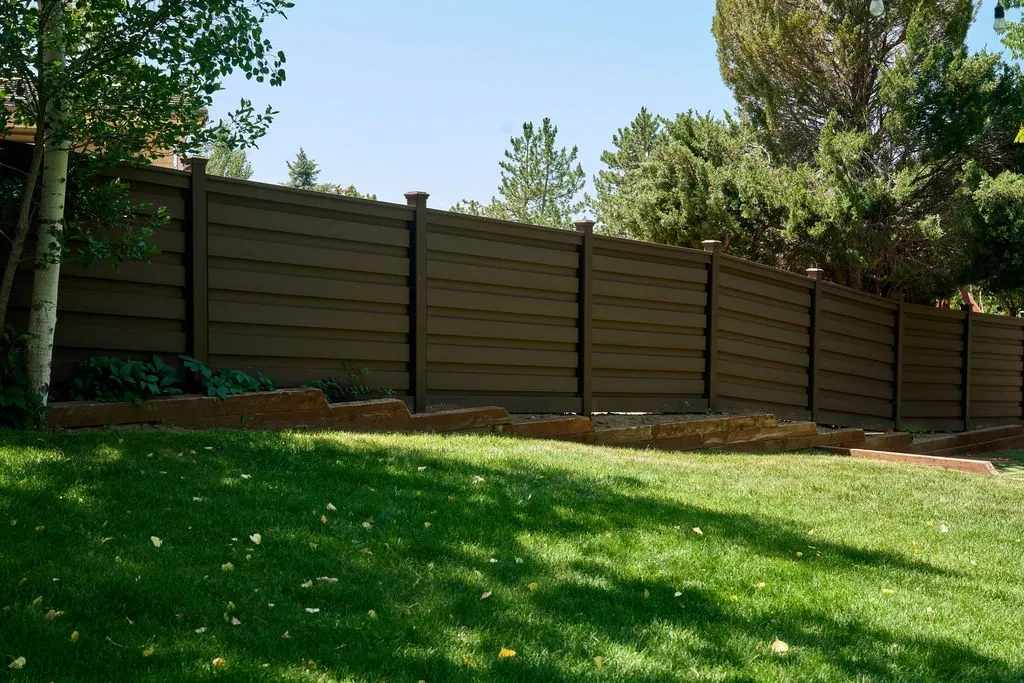
A stepped layout uses level fence sections that descend gradually with the slope. This option works well for privacy fence installation because it maintains consistent panel height and visual coverage. Each section requires precise post placement, making experience critical.
Stepped designs are commonly chosen for wood fencing where appearance and privacy are top priorities.
Racked Fence Systems for Natural Flow
Racked fencing adjusts the angle of the panels to follow the slope closely. This reduces gaps beneath the fence and creates a smoother transition along uneven ground. Racked designs are frequently used for metal fences and can be incorporated into advanced fence planning strategies.
Choosing between stepped and racked layouts is one of the most important decisions in slope-based fence installation.
Material Selection for Sloped Fence Installation
Wood Fencing Considerations
Wood adapts well to sloped installations but requires proper treatment and spacing. Moisture exposure is more common on slopes, making material quality essential. Pressure-treated posts and reinforced footings support long-term durability in residential fence installation projects.
Metal and Composite Fence Options
Aluminum and steel fences perform well on slopes due to their ability to rack without compromising strength. Composite fencing can also work, but requires careful installation to avoid stress points. Material choice directly impacts the success of any fence installation on uneven terrain.
Local Denver Factors That Affect Sloped Fence Installation
Zoning Rules and Height Measurements
Fence height on sloped lots is often measured differently than on flat properties. A fence that meets height limits at one end may exceed them at another. Reviewing local zoning guidance through the Denver Community Planning and Development Department helps homeowners understand how elevation affects compliance.
This step is an essential part of responsible fence planning in Denver.
Property Lines on Uneven Lots
Sloped properties can obscure boundary lines, especially where elevation changes are subtle. Accurate surveys are critical before starting fence installation to avoid disputes or costly adjustments later.
Why Professional Fence Installation Matters on Sloped Properties
Precision Makes the Difference
Sloped installations demand deeper post settings, precise leveling, and reinforced anchoring. Professional installers understand how to adapt techniques based on terrain changes, which helps prevent leaning and misalignment.
Homeowners working with Top Rail Fence Denver benefit from experience handling sloped properties throughout Denver, ensuring each fence installation is both stable and visually balanced.
Long-Term Performance and Reduced Repairs
When slope-related factors are addressed during planning, fences last longer and require less maintenance. This is especially important for privacy fence installation, where even small gaps or shifts are noticeable.
Preparing for Fence Installation on a Sloped Lot
Site Evaluation and Design Planning
Before construction begins, a detailed site evaluation identifies elevation changes, drainage paths, and layout options.
Clear Communication and Custom Solutions
Every sloped property is unique. Clear communication about privacy needs, design preferences, and long-term goals ensures the final fence fits both the terrain and the homeowner’s expectations. This customized approach is a key strength of Top Rail Fence Denver.
Final Thoughts on Fence Installation for Sloped Properties
Sloped lots require a higher level of care when planning fence installation. From layout selection to material performance and drainage management, every decision affects stability and appearance. With thoughtful fence planning and expert execution, sloped properties can achieve durable, attractive fencing solutions.
If you are considering residential fence installation or privacy fence installation on a sloped lot, explore your options or request guidance through the Contact Us page to get expert support from Top Rail Fence Denver.