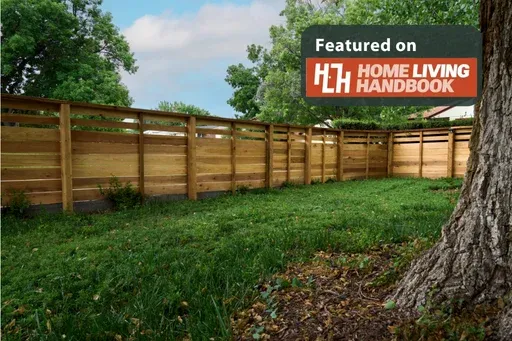
A long fence line can make a large property feel even more expansive when there is little variation from one end to the other. In the Florida Panhandle, thoughtful vinyl fencing design can break that visual length into recognizable sections while maintaining a cohesive boundary. Homeowners planning a large property can explore Top Rail Fence Florida Panhandle to consider how layout, transitions, landscaping, and fence design can work together.
The goal is not to make every section look different. Instead, the fence can use changes in direction, gates, landscaping, architectural features, and carefully planned panel groupings to establish visual rhythm. This makes a long boundary easier to read and allows the vinyl fencing to feel proportional to the property rather than appearing like one uninterrupted wall.
Give long boundaries a series of visual destinations
A large property may require hundreds of feet of fencing, but the finished installation does not have to read as one continuous element. Dividing the boundary into distinct visual moments can give the eye places to pause.
Use natural breaks along the property
Corners, driveway entrances, pedestrian gates, landscape beds, outdoor living areas, and changes in terrain can all provide opportunities to establish separate sections.
Rather than treating these features as obstacles to the fence layout, they can become part of the design. A driveway can create one major transition, while a garden area or side-yard gate can establish another.
This approach allows vinyl fencing to follow the property's existing organization instead of imposing one repetitive pattern across the entire boundary.
Create sections without losing continuity
Visual separation does not require completely different materials or unrelated designs. The same color, panel style, post treatment, and overall height can continue throughout the property while individual sections receive slightly different emphasis.
For example, a long backyard boundary could maintain the same vinyl fencing while using gates and landscape groupings to distinguish the pool area, entertaining space, side access, and garden area.
The result is a fence that feels unified but not monotonous.
Use scale to make a large property feel organized
Scale becomes increasingly important as the size of the property increases. A fence that looks appropriately proportioned on a compact residential lot can appear visually repetitive when extended across a much larger frontage.
Match section size to the property
Large properties generally have enough space to support broader visual groupings. Instead of creating numerous small interruptions, designers can establish fewer, more substantial sections.
This keeps the fence from appearing overly busy while still preventing an excessively long uninterrupted line.
The relationship between the house and the boundary also matters. A large home, expansive lawn, mature trees, and substantial outdoor spaces can support larger fence sections because the surrounding elements already provide visual scale.
Avoid making every transition equally prominent
If every panel change, post, or gate receives the same visual emphasis, the fence can become cluttered.
A stronger approach is to establish a hierarchy. Major entrances can receive greater emphasis, while secondary transitions remain subtle.
This gives the eye a clear order to follow and prevents the vinyl fencing from competing with the home's architecture.
Let gates divide the fence into meaningful areas
Gates naturally interrupt a long fence line, making them useful design tools for creating visual sections.
Give each access point a purpose
A driveway gate may establish the primary arrival point, while a pedestrian gate can connect the front yard with a side path. A backyard gate might provide access to a garden, pool area, or outdoor living space.
When these openings correspond with actual movement patterns, they create useful divisions rather than arbitrary breaks.
The planning process for vinyl fence installation should therefore consider where people need to enter and exit before determining how the fence sections will be distributed.
Use gate placement to establish hierarchy
Not every gate needs to have the same visual presence. The primary entrance can be positioned as the strongest focal point, while secondary access points can remain visually quieter.
This creates a more deliberate frontage because visitors can immediately understand which entrance is most important.
For a large Florida Panhandle property, this distinction can be particularly useful when a fence surrounds multiple outdoor zones.
Bring landscaping into the fence composition
Landscaping can soften long fence lines and create additional visual divisions without compromising the continuity of the boundary.
Use planting groups instead of isolated plants
A single plant placed against a long fence may have little effect on the overall composition. Larger planting groups can create stronger visual anchors.
The University of Florida IFAS notes that plant masses should be considered in relation to the size of the site and that larger sites can benefit from larger plant masses rather than numerous small groupings.
That principle works well alongside vinyl fencing. A substantial planting bed can visually separate one section of fence from another while maintaining a consistent boundary behind it.
Frame important sections with greenery
Planting can also emphasize specific areas of the property. Trees or shrubs near an entrance can frame the gate, while a broader planting bed can soften a long backyard section.
The goal is to create relationships between the fence and landscape rather than simply placing plants directly against every panel.
Vary the surroundings while keeping the fence consistent
A long boundary does not necessarily need multiple fence materials to create visual interest. Changes in the environment around the fence can accomplish much of the work.
Respond to different outdoor zones
A fence bordering an entertaining patio can have a different visual context from one surrounding a lawn or garden. Even when the same vinyl fencing continues throughout, the surrounding features can make each section feel distinct.
A patio might include planting beds and outdoor furniture, while a garden area could use shrubs and trees to establish a softer transition.
Work with changes in elevation
Slopes and grade changes naturally divide a long property into smaller visual areas. During fence installation, these conditions should be considered carefully so that the fence follows the property's character rather than appearing disconnected from the terrain.
Changes in grade can also create opportunities for different landscape treatments, helping the overall boundary feel more dynamic.
Make privacy work without creating one oversized wall
Privacy fencing can be especially effective for large properties, but using a continuous solid boundary across every part of the site can sometimes make the fence feel heavier than necessary.
Concentrate privacy where it matters most
Some parts of a property may require stronger screening than others. Areas near patios, pools, outdoor kitchens, or neighboring activity may benefit from more substantial privacy fencing.
Other sections might serve primarily as property boundaries and could use a less visually dominant arrangement where appropriate.
This creates functional variety while allowing the broader vinyl fencing design to remain consistent.
Use landscape layers to soften privacy sections
Where full privacy is necessary, landscaping can keep the fence from becoming the only dominant element.
Trees, shrubs, and planting beds can introduce depth in front of the fence. This creates a layered composition rather than leaving a long uninterrupted surface exposed.
Plan the transitions before fence installation begins
Creating visual sections works best when the divisions are considered during the design stage. Waiting until construction is underway can make it harder to coordinate gates, landscape areas, property features, and panel groupings.
Map the property according to how it is used
A useful plan should identify primary entrances, secondary access points, outdoor gathering areas, pools, gardens, driveways, service areas, and major landscape features.
From there, the fence can be divided into sections that correspond with those functions.
For homeowners working with Top Rail Fence Florida Panhandle, this type of planning can help turn a long property boundary into a coordinated sequence rather than a simple uninterrupted run. The available vinyl fencing options can then be evaluated according to the property's layout, desired privacy, and visual character.
Keep measurements consistent across sections
Even when individual sections have different surrounding features, their core fence dimensions should remain coordinated. Consistent post alignment, panel proportions, and transitions help preserve the sense of one complete installation.
This is particularly important when the property has several access points. A lack of consistency can make separate sections appear as though they were installed at different times.
Give the property a stronger sense of proportion
A long boundary should support the scale of the property instead of exaggerating its length. Strategic breaks can make the fence easier to understand visually while also connecting it to the way the property is actually used.
Vinyl fencing is well suited to this approach because the material can provide a consistent foundation across multiple areas while allowing the surrounding design to create differentiation. Gates can mark important access points, landscaping can establish visual pauses, and privacy fencing can be concentrated where screening matters most.
For Top Rail Fence Florida Panhandle, thoughtful planning means looking at the complete property rather than treating each fence panel as an isolated component. A well-planned vinyl fence installation can create distinct zones while maintaining a cohesive appearance from one end of the property to the other.
If your property has a long boundary and you want to determine where visual breaks, privacy sections, gates, or landscape transitions could improve the overall design, visit the Contact Us page to connect with Top Rail Fence Florida Panhandle and plan a vinyl fencing solution that gives your large property a more considered scale.