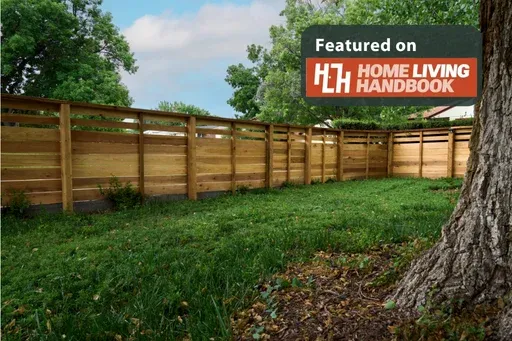
When homeowners plan grading work, the conversation usually centers around drainage, protecting the foundation, and fixing areas where water collects. One thing that often gets overlooked is the existing fence.
Changing the elevation of the yard can change how the fence sits in the ground, too. Posts can become exposed, gaps can develop underneath panels, and in some cases, the fence may need to be adjusted or rebuilt.
It's much easier to plan for that before the grading work starts.
When grading removes soil
This is one of the more common problems we see after a yard has been regraded.
If soil is removed to improve drainage or change the slope, fence posts that were properly buried can end up partially exposed. You may even see the concrete footing above the new ground level.
It doesn't just affect the appearance of the fence. The soil around a post provides support, so removing too much of it can leave the post with less lateral stability.
That's particularly important in the Greater Dallas area, where clay soil expands, and contracts as moisture levels change. A post that no longer has enough soil around it can be more vulnerable to movement over time.
Exposed footing can also change how water moves around the post. If water collects around the base instead of draining away, it can contribute to moisture-related damage, especially with wood posts.
When grading adds soil
Adding soil around an existing fence creates a different set of problems.
A post that was installed at the proper depth can end up buried much deeper than intended. More importantly, parts of a wood post that were meant to stay above ground are now in direct contact with soil and moisture.
That can increase the risk of premature deterioration.
At Top Rail Fence, we install cedar posts with clearance above the finished ground level and use drainage around the base. If new soil is brought up against the fence, that clearance can disappear.
If you're planning to raise the grade around an existing fence, it's worth having the fence looked at before the work begins.
When your neighbor changes their grade
Grading can become even more complicated when only one side of a shared fence is being changed.
For example, a neighbor may raise or lower the grade on their side of the fence. Suddenly, the two properties are at different elevations. You may see a gap underneath the fence on one side, while the posts or concrete are exposed on the other.
Drainage can also become a concern if the new grading changes where rainwater flows.
Texas property owners generally need to be careful about altering drainage in a way that causes damage to neighboring property. If grading work is changing the way water moves toward your property or fence, it's a good idea to address the issue with the contractor before the work is completed.
From the fencing side, the solution depends on how much the elevation has changed. In some cases, a rot board or other treatment along the bottom of the fence may help. Larger elevation changes may require a retaining solution or resetting portions of the fence to match the new grade.
There isn't one fix that works for every property.
Plan the fence and grading together
If you're planning both a new fence and grading work, talk to both contractors before either project starts.
Ideally, the final grade should be established before the fence is installed. That gives the fence installer a clear idea of the finished ground level and allows the posts to be set at the appropriate depth.
If grading has already been completed, give the soil time to settle before installing the fence when the project conditions call for it. The amount of settling time can vary depending on how much soil was moved, how it was compacted, and the weather.
When grading and fencing are happening close together, communication between the two crews can prevent a lot of unnecessary work later.
At Top Rail Fence, we regularly work around other home improvement projects and can coordinate the fence installation with your grading contractor.
Most fence installations are completed within 2 to 3 days, depending on the size and scope of the project. Every project starts with a free on-site estimate and transparent pricing. Financing is also available for qualifying projects.
Planning a grading project?
Before moving soil around an existing fence, have someone take a look at how the proposed grade will affect the posts, panels, and drainage.
Our free on-site evaluation can help you understand what needs to be changed and whether the existing fence can remain in place.
Request a free estimate or call (469) 868-8869 to talk with the Top Rail Fence team.