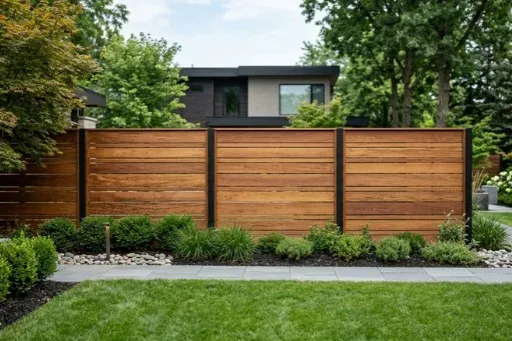
Before scheduling fence installation in Toledo, Ohio, check the city's zoning requirements, confirm the permitted height for your yard, and determine whether your project needs any additional approvals. The City of Toledo's current published guidance states that every fence, regardless of height, requires a Certificate of Zoning Compliance. However, that is different from a building permit, which is generally not required for residential fences six feet tall or less. Top Rail Fence Toledo can help you consider the practical details of your project, but the city must confirm the approvals that apply to your property.
Start with the approval Toledo requires for every fence
Understand the Certificate of Zoning Compliance
A Certificate of Zoning Compliance confirms that a proposed property improvement meets applicable zoning regulations. Toledo lists fences of all heights among the projects that require this certificate. That means a short decorative boundary fence is not automatically exempt simply because it does not require a separate building permit.
The city's application process calls for a site plan or drawing showing the proposed fence location, along with project details such as its height, purpose, and materials. The application is reviewed for compliance with the city's zoning rules. You should receive approval before starting construction rather than assuming that submitting an application is enough.
Know when a building permit is a separate consideration
Toledo's published guidance distinguishes between zoning approval and building permits. For residential properties, fences no taller than six feet generally do not require a building permit, but they still need the Certificate of Zoning Compliance. The city's building code also identifies fences up to seven feet high as exempt from building-permit approval on other properties, subject to applicable requirements.
If your project is taller than the applicable exemption, involves a commercial site, or includes other construction work, ask the city's building inspection staff which approvals are needed. A fence company should not treat the absence of a building-permit requirement as permission to proceed without zoning approval.
Choose a fence height that complies with local zoning
Check the rules for each part of your yard
Toledo's residential zoning code sets different maximum fence heights according to yard location:
- Front yard: 3.5 feet maximum.
- Side yard: 6 feet maximum.
- Rear yard: 6 feet maximum.
The code also prohibits any part of a fence from extending into the public right-of-way. These restrictions mean you should determine where each section sits before deciding on the final design.
For example, a tall privacy fence that works along the rear of a residential property may not be permitted in the front yard. If the boundary is close to a sidewalk, street, or neighboring property, confirm the correct placement rather than relying on visual estimates.
Review the zoning code for your property
The Toledo Municipal Code's residential fence provisions provide the written height and placement standards. These rules are useful when comparing different designs, but zoning requirements can vary with the property type and applicable district regulations.
A local fence company can help you think through the layout, material, and installation sequence. However, ask the city to confirm any uncertain height, setback, or placement issue before you commit to the design.
Prepare the right information for your application
Make the site plan clear and accurate
A complete application gives zoning staff the information they need to review the proposal. Toledo's guidance calls for a site plan or drawing showing the proposed fence location and details about the project, including its height and materials.
Before applying, prepare these details:
- The proposed fence line and height.
- The fence's position relative to the house and property boundaries.
- The planned material and general design.
- Any existing structures or site features that may affect placement.
- Property-line or easement information that needs further confirmation.
If you are unsure where the property boundary lies, consider consulting a qualified surveyor. An existing fence or landscaping line does not necessarily establish the legal property boundary.
Check for historic district requirements
A property located in a historic district may need a Certificate of Appropriateness before work begins. Toledo identifies this as an additional consideration for properties in these districts. Confirm whether the requirement applies to your address before proceeding with a new fence or a substantial change to an existing one.
These additional checks are part of planning responsible fence installation. Sorting them out early can reduce the risk of having to alter a completed project.
Coordinate the design with the approval process
Select materials after checking the rules
Wood, vinyl, aluminum, and other fencing options offer different levels of privacy, visibility, and maintenance. However, material selection should follow the initial checks on permitted height, placement, and required approvals.
When reviewing available fencing products, consider how the material will serve the property without conflicting with the proposed layout. A quality fence should meet your practical needs while fitting the approved plan.
Top Rail Fence Toledo can help you consider design choices and installation details, but only the relevant city department can confirm the official zoning decision. Avoid ordering materials or scheduling work until the necessary approval has been issued.
Do not assume replacement work is automatically exempt
Replacing an existing fence may seem simpler than building a new one, but the requirements depend on the nature of the work and the rules that apply. Do not assume that using the same location or material automatically removes the need for approval. Check with the city before treating a replacement or alteration as exempt.
This is particularly important if the new fence will be taller, follow a different boundary, or use a substantially different design from the existing structure.
Verify the requirements before work begins
Permit information can change as ordinances, administrative procedures, and local interpretations are updated. The requirements described here were checked against the City of Toledo's published guidance and its online municipal code available in October 2026. The municipal code website itself cautions that its text may not reflect every newly adopted change, so readers should confirm the current rules directly with the city before relying on them.
For a project-specific answer, contact the Toledo-Lucas County Plan Commission about the Certificate of Zoning Compliance and ask the Division of Building Inspection whether a separate building permit or other approval is needed. Do not begin construction until the required approvals are in place.
If you are planning fence installation and need help considering your property's layout, materials, and design, Top Rail Fence Toledo can help you review the project details. You can also visit Contact Us to discuss your fencing plans and prepare for the next steps.