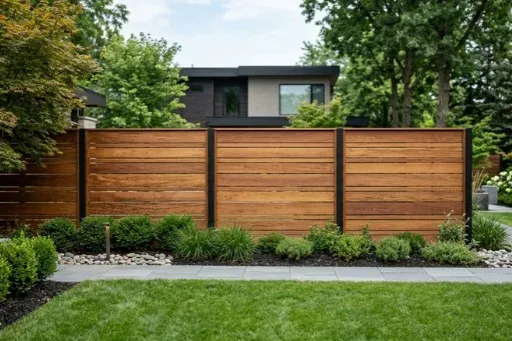
When the final employee leaves and the parking lot becomes quiet, your business property continues to make an impression. Its exterior communicates how well the organization manages its space, protects its assets, and maintains professional standards. A neglected, damaged, or poorly maintained commercial fence can create a different impression from a clean, well-positioned boundary that looks secure and organized. For businesses across Clearwater, the appearance of a fence after closing time deserves just as much attention as its daytime functionality. Working with Top Rail Fence Clearwater can help businesses approach fencing as an important part of their property's overall presentation rather than simply a boundary around the premises.
The message your fence sends when the business is closed
During operating hours, employees, customers, deliveries, and visitors bring activity to a commercial property. Once those activities stop, the fence becomes one of the most noticeable exterior features. Its condition, layout, and visibility can influence how people perceive the business from nearby roads, sidewalks, and parking areas.
A straight, properly maintained commercial fence communicates organization and attention to detail. It establishes where private areas begin, separates business operations from public spaces, and gives the property a defined appearance.
On the other hand, loose panels, rusted sections, leaning posts, and damaged gates can suggest that exterior maintenance is being overlooked. Even when the building itself looks impressive, an unattractive perimeter can weaken the overall impression.
A well-kept perimeter reflects professional standards
First impressions do not disappear when the office lights go off. A commercial property may still be visible to neighboring businesses, passing motorists, security personnel, and people visiting nearby establishments.
A consistent fence design helps create a finished exterior. Matching materials, uniform heights, properly aligned posts, and functional gates contribute to a more professional appearance. These details also demonstrate that the business considers its entire property important, including areas that customers may not regularly access.
For businesses in Clearwater, maintaining this appearance is particularly relevant when commercial properties remain visible throughout the evening.
Security and appearance should work together
A fence should provide more than an attractive outline around a commercial property. It must also support the security requirements of the business. Storage facilities, retail centers, office complexes, warehouses, and industrial properties all have different priorities when controlling access after closing time.
A suitable commercial fence can establish clear boundaries while helping discourage unauthorized entry. However, choosing a design based exclusively on height or strength may overlook other important considerations, including visibility, gate placement, and the property's architectural appearance.
The National Research Council's Security Fencing Considerations Guide highlights the importance of evaluating fencing materials, gates, lighting, surrounding conditions, and access requirements when planning a perimeter. These considerations demonstrate why commercial fencing decisions should account for the complete property rather than the fence material alone.
Visibility can influence nighttime security
Some commercial properties benefit from open fencing that allows security personnel to observe activity around the perimeter. Chain link fencing is particularly useful when visibility is a priority, especially around parking facilities, equipment storage areas, and industrial properties.
Other businesses may need greater privacy around waste collection points, employee-only sections, or sensitive equipment. In these situations, a more enclosed commercial fence design may provide a better balance between appearance and practical requirements.
The objective is to select a configuration that supports the property's security needs without creating unnecessary visual barriers or obstructing important sightlines.
Clearwater's climate makes fence condition more noticeable
Commercial fencing in Clearwater must withstand environmental conditions that can affect its appearance over time. Humidity, rainfall, strong winds, and coastal air can place additional demands on exterior materials and hardware.
A fence that looks impressive immediately after installation may lose its appearance when maintenance is neglected. Metal components can develop corrosion, wooden sections may experience moisture-related deterioration, and gates can become difficult to operate when hinges and supporting hardware are not properly maintained.
These conditions make material selection an important part of commercial fence installation.
Material selection affects long-term presentation
Different commercial environments call for different fencing materials. Understanding how each option performs helps businesses make decisions that account for both appearance and durability.
- Ornamental metal fencing: Provides a refined, professional appearance while maintaining visibility. It can work particularly well around office complexes, retail properties, and customer-facing commercial spaces.
- Chain link fencing: Offers a practical solution for warehouses, parking lots, storage facilities, and larger commercial boundaries. Coated finishes can provide a cleaner appearance while helping protect the material.
- Vinyl fencing: Creates a more enclosed and uniform appearance, making it suitable for commercial areas where privacy and low-maintenance presentation are priorities.
- Wood fencing: Offers a natural appearance and can help conceal service areas, waste enclosures, and equipment spaces that businesses prefer to keep out of public view.
The right choice depends on the property's layout, intended use, maintenance expectations, and surrounding environment.
Gate design can make or break the overall impression
A commercial fence may look attractive along its entire perimeter, but an outdated or poorly functioning entrance can undermine that appearance. Gates are frequently the most noticeable access points, particularly when vehicles and employees use the same entrance throughout the working day.
After business hours, gates become even more important because they help define how the property is secured. A damaged latch, misaligned gate, or visibly deteriorating entrance can affect both functionality and the impression the property creates.
Entry points need the same attention as fence panels
During commercial fence installation, gate placement should account for vehicle movement, pedestrian access, delivery requirements, and emergency access. A business that receives regular deliveries may need a wider vehicle entrance, while an office complex may benefit from a clearly defined pedestrian access point.
Matching gate materials and finishes with the surrounding commercial fence design creates a consistent appearance. Businesses should also consider appropriate locking mechanisms, access controls, and hardware suited to how frequently each entrance is used.
For properties with automated entrances, regular inspections can help identify operational issues before they become disruptive.
Lighting and maintenance complete the nighttime appearance
Even a professionally installed fence can lose some of its effectiveness when the surrounding area is poorly maintained. Exterior lighting, landscaping, and routine inspections all contribute to how a commercial perimeter looks after sunset.
Lighting can make fence lines, entrances, and designated access points easier to identify. It can also improve visibility for security personnel and monitoring systems. However, lighting placement should account for neighboring properties, road visibility, and unnecessary glare.
Small maintenance issues can create larger impressions
A consistent inspection routine helps identify problems before they affect the entire perimeter. Business managers should pay attention to:
- Loose posts, damaged panels, and sections that no longer align correctly.
- Rust, peeling finishes, or other signs of material deterioration.
- Gates that drag, fail to latch, or become difficult to open and close.
- Vegetation that obstructs visibility or interferes with fence components.
- Damaged lighting fixtures and poorly illuminated entrances.
- Accumulated debris around the fence line and access points.
Addressing these issues helps preserve the appearance and functionality of the commercial fence. It also makes maintenance more manageable because minor concerns can be handled before they require extensive repairs or replacement.
Build a commercial perimeter that represents your business
Your business exterior continues to represent your organization long after employees have gone home. A thoughtfully planned commercial fence design can reinforce professionalism, establish clear boundaries, and support security without making the property appear unwelcoming.
Through professional commercial fence installation, businesses can select suitable materials, coordinate gates with perimeter layouts, and create an exterior that meets their operational requirements. The right approach considers how the property functions during working hours and how it should look when activity comes to a stop.
Top Rail Fence Clearwater helps businesses explore fencing solutions that balance appearance, durability, and practical property requirements. Whether you are planning a new installation, replacing an aging perimeter, or improving an existing entrance, a carefully selected commercial fence can make a meaningful difference to your property's presentation.
Give your business exterior the attention it deserves. Connect with Top Rail Fence Clearwater through the Contact Us page to discuss your commercial fence installation needs and find a fencing solution that keeps your property looking professional and well-defined after business hours.