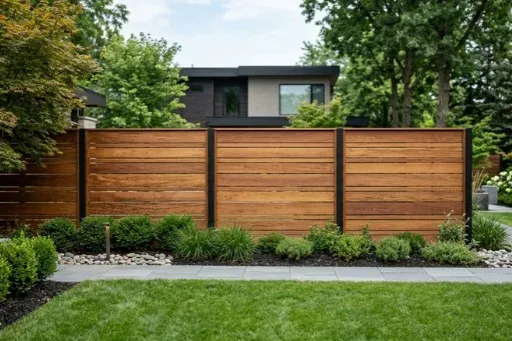
Selecting a wood fence involves more than choosing a stain color or deciding how much privacy the yard needs. The grain, moisture condition, knots, and natural variations in each board can influence how the finished fence looks and performs. In Fairfield County, where seasonal moisture and temperature changes can affect outdoor wood, careful lumber selection helps reduce avoidable problems after construction. Top Rail Fence Fairfield County can help homeowners evaluate fencing options and plan a wood fence installation that suits the property's layout, appearance, and intended use.
Read the grain before judging the board
Wood is a natural material, so no two boards have exactly the same pattern. Grain direction, growth rings, and changes in texture offer useful clues about how a board may behave after installation.
Look for straight, consistent grain
Straight grain generally provides a predictable appearance and can make boards easier to position neatly along a fence line. When comparing lumber, examine the length of each board rather than judging it by the pattern visible at one end.
Grain that twists sharply or changes direction abruptly may be associated with uneven movement as the wood dries. This does not automatically make a board unsuitable, but it deserves attention when the goal is a uniform wood fence with aligned tops and consistent spacing.
For visible fence sections, choosing boards with compatible grain patterns can also create a more coordinated finish. Perfectly matching every board is unnecessary, since natural variation contributes to wood's character. The priority is to identify pieces that are structurally sound and suitable for their intended position.
Distinguish attractive knots from potential weak points
Knots form where branches grew from the tree, and they are common in many fencing lumber grades. Small, tight knots can add character without necessarily affecting a board's usefulness.
Loose knots, holes left by fallen branches, and clusters of large knots near edges deserve closer inspection. These features can create weak points, especially where boards must hold fasteners or withstand repeated movement from wind and changing weather.
During a wood fence installation, boards with significant defects near fastening locations may split or fail to hold screws securely. Inspect the area where each fastener will sit, not just the center of the board, to help determine whether the piece is appropriate for the planned application.
Separate natural character from defects that affect performance
A wood fence does not need perfectly uniform lumber to last, but it does need boards that are appropriate for outdoor use. Learning to distinguish cosmetic imperfections from structural concerns helps make lumber selection more deliberate.
Identify warping before the boards reach the fence line
Lay boards on a reasonably flat surface and look along their edges. Bowing creates a curve along the length of a board, while crooking describes a sideways curve along its edge. Cupping causes the board's width to curve, and twisting occurs when its corners do not lie in the same plane.
These defects can make installation more difficult. A heavily warped board may resist alignment with neighboring pickets, produce inconsistent gaps, or place additional stress on fasteners when forced into position.
Minor variations may be manageable depending on the fence design, but severely distorted lumber is usually better rejected before construction. Trying to straighten every defective board on site can slow the project and compromise the finished appearance.
Check for splits, checks, and damaged edges
Small surface checks can develop as wood loses moisture and shrinks. They are not always evidence of serious damage, particularly when they remain shallow and do not interfere with the board's structural integrity.
Splits that extend through the board, however, can weaken the area around screws or nails. Damaged ends also deserve attention because fastening too close to a split can cause it to spread during installation.
Examine both ends, the edges, and the broad faces of each board. Reject lumber with severe splitting, extensive decay, or damage that makes it unsuitable for its intended role. This simple screening step helps prevent avoidable replacements once the wood fence is assembled.
Compare moisture condition and treatment quality
Lumber changes dimension as its moisture content changes. Boards that are installed while excessively wet may shrink as they dry, potentially creating gaps or changing the alignment of the finished fence.
Understand why moisture matters
Wood naturally absorbs and releases moisture in response to its surroundings. As moisture content changes, boards can shrink, swell, and develop additional checks. The extent of movement depends on the species, grain orientation, initial moisture content, and environmental exposure.
The U.S. Department of Agriculture's Wood Handbook: Wood as an Engineering Material explains the relationship between wood moisture and dimensional changes. Understanding this behavior helps when comparing lumber and planning board spacing.
For a wood fence installation, the objective is to use lumber suitable for exterior exposure and follow the fencing system's recommended installation practices. Boards should be assessed for their actual condition rather than assumed ready simply because they were purchased recently.
Inspect treated fence boards carefully
Treated fence boards are designed for particular applications, and the treatment must be appropriate for the intended exposure. Ground-contact components generally have different requirements from boards installed above the soil.
Check product labels and supplier documentation to confirm that the lumber is intended for its planned use. Look for excessive damage, decay, deep splits, or areas where cutting and drilling may require additional treatment according to the product manufacturer's instructions.
Pressure treatment does not make wood immune to warping, splitting, or every form of deterioration. Good lumber selection remains important even when the boards have been treated for outdoor conditions.
Choose a wood species that suits the project
The species selected for a wood fence influences its appearance, natural durability, weight, and maintenance needs. Comparing these characteristics helps narrow the options before ordering materials.
Consider cedar for its natural characteristics
A cedar fence is valued for its distinctive grain, warm color, and natural resistance to certain forms of decay and insect activity. However, cedar boards can still develop checks, warp, or deteriorate when conditions and maintenance are unfavorable.
Inspect cedar lumber for excessive knots, damaged edges, pronounced twisting, and inconsistent dimensions. Boards with clear, relatively straight grain may suit projects where a more uniform appearance is desired, while knotty grades can offer a more rustic finish.
The best choice depends on the intended look, budget, and willingness to maintain the fence over time. Cedar should be evaluated as a complete material option rather than selected solely because of its reputation.
Match board quality to its position
Not every section of a fence has the same visual or structural demands. Boards near an entrance, along a prominent street-facing boundary, or beside an outdoor seating area may receive closer attention because their appearance is more noticeable.
Less prominent sections may accommodate greater natural variation, provided the boards remain suitable for exterior use. Regardless of placement, do not use a visibly compromised board in a critical fastening location simply to avoid waste.
Make lumber inspection part of installation planning
The quality of individual boards matters, but the way they fit into the overall layout is equally important. Consistent dimensions, appropriate fastener placement, and suitable spacing help the finished fence look cohesive.
Sort boards before fastening begins
Separate lumber into groups based on length, visible quality, and intended position. Set aside boards with significant defects, then distribute suitable pieces to achieve a balanced appearance.
Check measurements before cutting, especially where fence sections meet gates, corners, or changes in elevation. This makes it easier to reserve the most suitable boards for areas that require precise fitting.
Plan for weather exposure and future care
The bottom of a fence can be vulnerable to splashback, soil contact, and vegetation that holds moisture against the boards. Maintain appropriate ground clearance and follow the material manufacturer's guidance for installation and finishing.
Regular wood fence inspections can help identify loose fasteners, developing splits, damaged boards, and signs of decay. Prompt attention to these issues can reduce the likelihood that a small repair will spread to adjacent sections.
Build a better fence by selecting better boards
A dependable wood fence starts with lumber that suits the environment and the demands of the design. Straight grain, sound knots, manageable moisture levels, and the right treatment all contribute to a more predictable installation. By comparing boards before construction, homeowners can reduce material waste, improve alignment, and make informed decisions about options such as a cedar fence or treated fence boards.
For help evaluating lumber choices, planning a layout, or arranging a wood fence installation, Top Rail Fence Fairfield County can help you identify options suited to your property. Visit the Contact Us page to discuss your project and determine the next steps toward a wood fence that balances natural character, practical performance, and long-term value.