Sloped yards are one of the most common challenges we run into across North Dallas, and honestly, one of the most satisfying to solve. The right approach makes a fence look intentional and clean. The wrong one looks like something went sideways during installation — literally.
If your yard isn't flat, here's what you need to know before picking a style.
The Two Ways to Fence a Slope
There's no one-size-fits-all answer for sloped yards. It comes down to two main methods, and each one suits a different kind of yard and look.
Stepped fencing follows the slope in a staircase pattern. Each panel sits level, but the panels drop in increments as the yard slopes down. It's a clean, structured look that works particularly well with vinyl and ornamental metal, where the geometry of the material pairs naturally with the sharp, defined lines of a stepped layout.
The tradeoff is the triangular gaps that appear at the base of each step where the panel ends and the ground continues to slope. For most homeowners that's a purely visual consideration, but if you have small pets or kids, those gaps are worth thinking about.
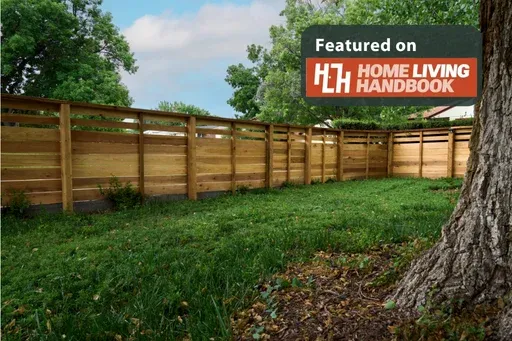
Racked fencing — sometimes called raked fencing — follows the slope continuously. The posts go in at consistent intervals and the fence rails angle with the ground, so the top of the fence runs parallel to the slope rather than stepping down in sections. It's a more flowing, natural look that tends to blend better with landscaped yards and works especially well with wood.
Racking has its limits though. Most materials can only rack so far before the pickets start to look skewed or the structural integrity of the panel is compromised. Very steep slopes sometimes need a combination of both methods to get right.
So Which One Is Right for Your Yard?
A few things help make that decision easier.
If your yard has a gradual, consistent slope, racking usually gives the cleaner result. If the slope is steep or uneven with multiple grade changes, stepping tends to be more practical and still looks great when done properly. The material matters too — wood racks well, vinyl typically steps better, and ornamental metal can go either way depending on the design.
The honest answer is that the best choice depends on your specific yard, and this is exactly the kind of project where an on-site consultation makes a real difference. What looks straightforward from a photo often has a grade change or drainage consideration that changes the recommendation entirely.
What to Expect From the Installation
Sloped yard fencing takes more planning than a flat installation. Posts need to be set at varying heights, panels need to be cut or angled correctly, and the finished line needs to look deliberate rather than improvised.
At Top Rail Fence North Dallas, we walk every sloped project before we give a recommendation. We look at the grade, the material, the layout, and what the fence needs to accomplish — privacy, containment, curb appeal — and we give you an honest answer about what will look best and hold up long term.
You can see how we approach projects like this on our process page and browse real installations in our North Dallas fence gallery.
👉 Request a Free Estimate and we'll come take a look at your yard before anything else.