Choosing the right fence for a home involves balancing appearance, privacy, maintenance, property use, and long-term expectations. In North Jersey, residential properties can have very different layouts, from compact suburban yards to larger lots with mature landscaping and varied terrain. That makes the material and design selected for fence installation an important part of the planning process. Homeowners can explore fencing options on the Top Rail Fence North Jersey page to compare materials and determine which approach fits their property's needs.
Begin with the role the fence needs to play
The best fence type depends heavily on what the boundary is supposed to accomplish. A fence intended to create backyard privacy has different requirements from one designed to contain a dog, define a front yard, or provide an attractive boundary around a pool.
Privacy calls for a different approach
A homeowner seeking greater seclusion may want a solid or closely spaced fence that limits direct views into the yard. The height, board or panel arrangement, and placement can all affect how much privacy the finished fence provides.
The surrounding landscape also matters. A fence beside a patio may need to block neighboring sightlines, while a side-yard fence may primarily define the property without requiring complete visual separation.
Pet and family use can influence the layout
Homes with dogs or young children may need a fence that prioritizes containment and convenient access. Gate placement becomes particularly important because the fence should allow people to enter and leave without creating unnecessary opportunities for pets to escape.
The layout should also account for play areas, outdoor furniture, pools, gardens, and other features that affect how the backyard is used.
Wood brings flexibility to residential designs
Wood remains a versatile option for homeowners who want a natural material with a traditional residential appearance. Its visual character can complement landscaping and different architectural styles.
Explore different wood configurations
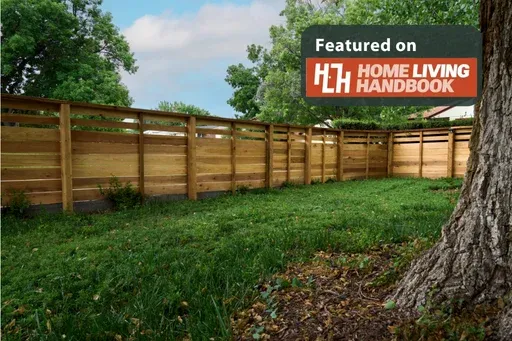
Wood can be arranged in several ways depending on the desired appearance and level of privacy. Closely spaced boards can create a more enclosed boundary, while other configurations can allow greater visibility.
The design can also incorporate different posts, gates, and decorative details to create a fence that feels connected to the home's exterior.
Consider what wood maintenance involves
A wood fence installation should be considered with long-term maintenance in mind. Wood is exposed to weather throughout the year, so its appearance can change over time depending on environmental conditions and maintenance practices.
Homeowners considering wood should discuss the expected upkeep before selecting the material. This makes it easier to establish realistic expectations for the fence's appearance over its service life.
Vinyl offers a consistent finished appearance
Vinyl can be a practical option for homeowners who prefer clean lines and a consistent visual finish. Its appearance can work particularly well with homes where the fence needs to provide a polished backdrop around the yard.
Look at panel style and proportions
A vinyl fence is not defined only by its material. Panel height, width, post proportions, colors, and decorative elements can change the overall appearance.
For a smaller backyard, proportions can be especially important. A design that feels balanced with the home's scale can prevent the fence from visually overwhelming the property.
Think about where vinyl fits best
A vinyl fence installation may suit homeowners looking for a uniform residential boundary around a backyard, garden, or outdoor living area. The material can also be used for privacy-oriented designs where a consistent panel appearance is desired.
The right configuration depends on the property's layout and the function the fence needs to serve.
Open designs can preserve visibility
Not every North Jersey home requires a solid boundary. Some properties benefit from fencing that defines the space while maintaining a visual connection between the yard and its surroundings.
Aluminum can complement open landscapes
Aluminum fencing can provide a more open appearance than a solid privacy fence. This can be useful around front yards, landscaped areas, pools, or properties where homeowners want the boundary to remain visually lighter.
The style can also complement architectural features without creating a completely enclosed appearance.
Ornamental designs can add definition
Decorative metal fencing can provide a formal boundary while allowing views through the fence. This makes it an option for homeowners who prioritize appearance and definition rather than complete privacy.
The surrounding landscaping can also become part of the visual design because plants remain visible through an open fence configuration.
Chain link can prioritize function
Chain link fencing can be useful when the primary objective is practical enclosure. It can define a property, contain pets, or secure a particular area without creating a solid visual barrier.
Consider where visibility is useful
Because chain link allows views through the fence, it may be appropriate where monitoring the yard or maintaining visibility is important.
It can also work around areas where a solid fence would feel unnecessarily enclosed.
Add privacy strategically when needed
Where additional screening is desired, landscaping or compatible screening solutions can change the visual character of a chain link boundary.
This demonstrates why fence installation should be planned around the property's actual purpose instead of selecting a material based solely on appearance.
The property itself should influence material selection
Two houses in the same North Jersey neighborhood may require completely different fencing solutions. Terrain, lot dimensions, existing structures, landscaping, and neighboring properties all affect the practical options.
Study the shape of the yard
A narrow side yard may benefit from a simple configuration, while a large property with several outdoor zones may require multiple fence sections and different gate locations.
Sloped terrain can also influence how sections are positioned. The finished fence should follow the site's conditions in a way that maintains a deliberate appearance.
Work around established landscaping
Mature trees, gardens, retaining walls, sheds, patios, and other features should be considered before the fence line is finalized.
A fence that ignores these features can create difficult access points or force unnecessary changes to the landscape. A carefully planned layout can work around existing elements while preserving their usefulness.
Gates deserve as much attention as the fence
The fence material may attract most of the attention, but gates can have a major impact on everyday usability.
Match access points to daily routines
Think about how residents enter the yard. A pedestrian gate may be enough for a backyard walkway, while wider access may be needed for vehicles, lawn equipment, or maintenance.
The gate should be placed where it supports natural movement rather than forcing people to take an inconvenient route.
Coordinate gates with the selected material
A gate that does not match the fence can make the installation look disconnected. Material, color, height, hardware, and proportions should be considered together.
This is especially important when a property has more than one access point, and several gates are required.
Local requirements can affect the final choice
Material selection should also be considered alongside applicable regulations. New Jersey's Department of Community Affairs explains that building and construction requirements are administered through local municipal construction offices, and its current code resources provide the state's applicable construction regulations.
Check requirements before ordering materials
New Jersey's Uniform Construction Code states that a construction permit is generally not required for fences six feet or less in height, although that exception does not apply to barriers surrounding public or private swimming pools.
Local zoning requirements can still affect placement, height, setbacks, visibility, and other aspects of a fence project. That makes it sensible to confirm the requirements applicable to the specific property before finalizing a design.
Pay attention to environmentally regulated areas
Properties near regulated environmental areas can involve additional considerations. The New Jersey Department of Environmental Protection notes that fencing in wetlands requires prior approval, while certain fence projects in regulated flood hazard areas can have specific conditions.
These conditions can influence material and placement decisions, so they should be identified before fence installation begins.
Compare the complete project instead of one feature
Selecting a fence should involve more than asking which material looks best. The right decision comes from considering how the fence will function alongside the house, yard, landscaping, gates, and maintenance expectations.
Weigh appearance against practical use
A beautiful fence may not be appropriate if it does not provide enough privacy, does not contain a pet effectively, or makes access difficult.
Likewise, a highly functional fence may not suit a homeowner who wants the boundary to complement the architecture and landscaping.
Consider future changes to the property
Outdoor spaces can change. A yard that currently contains a simple lawn could eventually include a patio, garden, pool, play area, or outdoor kitchen.
A thoughtful fence installation can leave enough flexibility for future changes instead of positioning gates or sections in ways that restrict later improvements.
Match the fence to the home's character
The fence should feel like part of the property rather than an unrelated structure added at the perimeter.
Coordinate colors and textures
Wood can introduce natural texture, vinyl can provide a uniform appearance, and aluminum or ornamental metal can create a lighter visual boundary.
The home's siding, roofing, trim, landscaping, and hardscape can all provide clues about which fence style will look cohesive.
Consider the view from both sides
A residential fence is experienced from inside the yard as well as from the street or neighboring properties. The finished appearance should therefore make sense from multiple viewpoints.
Posts, gates, panel transitions, and landscaping can all influence how the fence looks from different angles.
Professional planning brings the options together
Choosing between wood, vinyl, aluminum, chain link, or another style is only one part of the decision. The property's dimensions, terrain, intended use, gates, local requirements, and desired appearance all need to work together.
A knowledgeable fence company can help translate those considerations into a practical design rather than treating material selection as an isolated decision. Top Rail Fence North Jersey can help homeowners compare fencing possibilities and consider how each option fits the specific characteristics of the property.
For homeowners considering either a wood fence installation or vinyl fence installation, the material should be evaluated alongside maintenance expectations, privacy goals, property layout, and the home's architectural style. The same principle applies when considering open metal fencing, chain link, or other residential options.
Top Rail Fence North Jersey can help homeowners move from general ideas to a more defined fence installation plan based on the property's needs. To discuss available options and the next stage of the project, homeowners can use the Contact Us page to connect with the team.
There is no single fence material that suits every North Jersey home. The appropriate choice depends on what the fence needs to accomplish, how the property is configured, how much maintenance is acceptable, and how the finished boundary should relate to the home. By comparing those factors before construction, homeowners can select a fence style that supports both the practical and visual needs of their property.