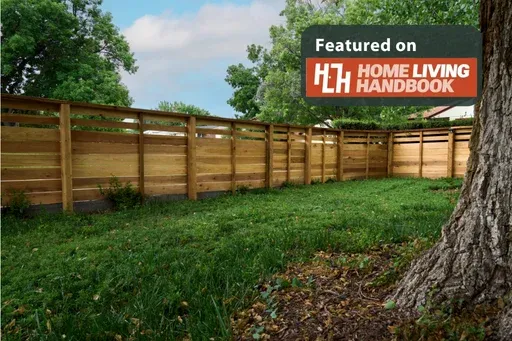
Long stretches of fencing can sometimes look visually repetitive, especially when the same panel pattern continues from one end of a property to the other. In Volusia County, framed sections are bringing another layer of detail to this familiar approach. A thoughtfully planned wood fence for Volusia County properties can use larger frames, defined posts, and carefully spaced sections to make an extended boundary feel more intentional and architectural.
Break up the long run with purposeful sections
A continuous fence line does not have to look completely uniform. Framed sections can introduce rhythm without abandoning the consistency that makes a wood fence effective.
Instead of viewing every panel as an isolated piece, the entire boundary can be organized into a sequence of sections. Each frame establishes a visual stopping point while the repeated pattern keeps the installation cohesive.
Give each section a defined perimeter
A framed panel can use posts and rails to create a more finished outline around the infill boards. This creates a subtle distinction between one section and the next.
The effect can be especially noticeable along expansive property lines. Rather than seeing one uninterrupted wall of boards, the eye encounters a series of connected elements.
Create rhythm without excessive decoration
Framing does not require elaborate ornamental features. Simple horizontal rails, substantial posts, or consistent panel proportions can provide enough definition.
This makes the approach adaptable to different architectural styles. A traditional home may suit more pronounced framing, while a contemporary property may benefit from narrower, cleaner lines.
Use panel proportions to control the visual pace
The size of each framed section can influence how quickly the eye moves across the fence. Narrower sections create more frequent divisions, while wider sections produce a calmer and more expansive appearance.
Match section width to the property
A wood fence should relate to the scale of the property rather than following one universal panel dimension. A large backyard may support broader framed sections, while a smaller lot may benefit from tighter proportions.
The surrounding architecture also matters. A fence with very large sections can feel disconnected from a compact home, while extremely narrow sections may appear unnecessarily busy along a broad frontage.
Let posts become part of the design
Posts do more than support the fence. In a framed configuration, they help establish the visual boundaries between sections.
Their placement can emphasize corners, changes in direction, gates, landscaping features, or transitions between different areas of the property.
Make transitions more noticeable
One of the strengths of framed wood fence designs is the ability to use different sections to respond to changes in the landscape.
A fence does not always need to maintain exactly the same appearance across the entire property.
Mark changes in elevation
Sloping terrain can make a long fence line more visually complicated. Framed sections can help organize those changes by creating smaller visual units.
The installation still needs to follow the property's grade appropriately, but the individual sections can make transitions appear more deliberate.
Highlight corners and direction changes
Corners naturally attract attention because the fence changes direction. Strong framing around these points can make the transition feel intentional rather than simply functional.
A corner post can become a design feature that anchors two fence runs while reinforcing the overall structure.
Give gates a stronger connection to the fence
A gate should not feel like a separate object inserted into the middle of a wood fence. Framed sections provide an opportunity to create continuity between the entrance and surrounding panels.
Repeat the same framing language
If the fence uses defined rails and posts, carrying those details into the gate can create a more unified appearance.
The gate can still have its own proportions or hardware while maintaining enough visual similarity to belong to the same installation.
Use the entrance as a natural focal point
A gate can interrupt the repetition of a long boundary in a useful way. Framing around the entrance can make the opening easier to identify while creating a stronger relationship between the driveway, walkway, and fence.
This can be especially useful when the property has a long street-facing boundary where the entrance might otherwise get lost.
Combine framed panels with landscape features
Landscaping can become more prominent when it is placed against a structured fence background. The frames can help organize the relationship between plants and the boundary.
Create visual windows around greenery
A framed section can draw attention to a tree, ornamental planting bed, climbing plant, or other landscape feature positioned near the fence.
The goal is not necessarily to place something inside every section. Leaving selected areas visually simpler can create contrast and prevent the design from becoming crowded.
Work around established trees
Existing trees can affect where fence posts and panels can be placed. Their trunks, roots, branches, and future growth should be considered during planning.
A professional fence installation can account for these conditions while preserving important landscape features rather than forcing the fence into a rigid layout.
Let the material provide the character
Framing changes the structure of a fence, but the wood itself remains an important part of the finished appearance. Grain, color, board arrangement, and finish can all affect how the framed sections are perceived.
Choose board arrangements that support the frame
Vertical boards can emphasize height, while horizontal arrangements can create stronger lateral movement. The frame should complement the selected orientation rather than competing with it.
A consistent relationship between the frame and infill gives the wood fence a more deliberate appearance.
Consider how finishes interact with the structure
Natural-looking finishes can emphasize wood grain, while painted surfaces can create a more uniform architectural appearance.
The appropriate treatment depends on the desired look, the selected material, and the maintenance expectations for the property.
Design for moisture exposure and long-term care
A decorative approach still needs to account for the conditions surrounding the fence. Florida's climate makes moisture management particularly relevant when wood is used outdoors.
The Florida Department of Agriculture and Consumer Services notes that dampwood termites can damage wet or damp wood and identifies conditions such as poor drainage, leaking water sources, and unsealed wood as factors that can contribute to termite-related problems. For property owners considering a wood boundary, Florida guidance on dampwood and drywood termites provides useful background when thinking about moisture around exterior wood.
Keep water movement in mind
The area around the fence should be evaluated for irrigation patterns, drainage, standing water, and vegetation that remains against the boards.
Good planning during wood fence installation can help the finished structure work more effectively with the surrounding landscape.
Keep maintenance accessible
Framed sections can make individual components easier to identify during inspections. Posts, rails, fasteners, and boards can each be checked for changes over time.
Regular observation can also help identify areas where vegetation, irrigation, or drainage conditions may need attention.
Use framing to distinguish different areas
A single property may have several outdoor functions. One portion might define the front boundary, another could surround a backyard, and another might screen a service area.
Framing can help create subtle visual differences while keeping the overall wood fence consistent.
Create a more formal front boundary
The street-facing portion of the fence can use more pronounced framing to establish a stronger architectural presence.
A simpler treatment can then continue around less visible areas, depending on the property's layout and design goals.
Give private areas a different emphasis
Backyard sections may prioritize privacy, while side-yard sections may focus more heavily on access and circulation.
The framing approach can remain consistent even when the infill, height, or gate arrangement changes between zones.
Plan the full fence before choosing individual panels
A framed appearance works best when the entire boundary is considered as one composition. Gates, corners, slopes, landscaping, property features, and changes in use should all be accounted for before final decisions are made.
This is where experienced planning can make a difference. Top Rail Fence Volusia County can help evaluate how panel proportions, framing, access points, and property features can work together instead of treating each section as an independent choice.
A well-planned wood fence does not have to rely on elaborate decoration to create visual interest. Framed sections can provide structure, rhythm, and definition while still preserving the natural character that makes wood attractive. For properties with long boundaries, this approach can make the fence feel more crafted without making it unnecessarily complicated.
The return of framed sections also creates more opportunities to tailor wood fence designs to individual properties. Section width, board orientation, post proportions, gates, corners, and landscape transitions can all contribute to a finished boundary that feels intentional from one end to the other. If you are considering a new wood fence installation in Volusia County, Contact Us to discuss your project with Top Rail Fence Volusia County and explore a wood fence approach that gives the entire property a more considered appearance.